Dearest Friends,
Thank you for your presences and your participation in our most recent gathering.
In our last session, we began a series of explorations on what psychologists refer to as the self-transcendent emotions, i.e., expansive emotions that reduce our preoccupation with ourselves and shift our attention to enhancing the well-being of others. As I shared in my brief reflections, I’ve chosen to focus on these emotions because they can powerfully support us in meeting and transforming the ecological crises of our times.
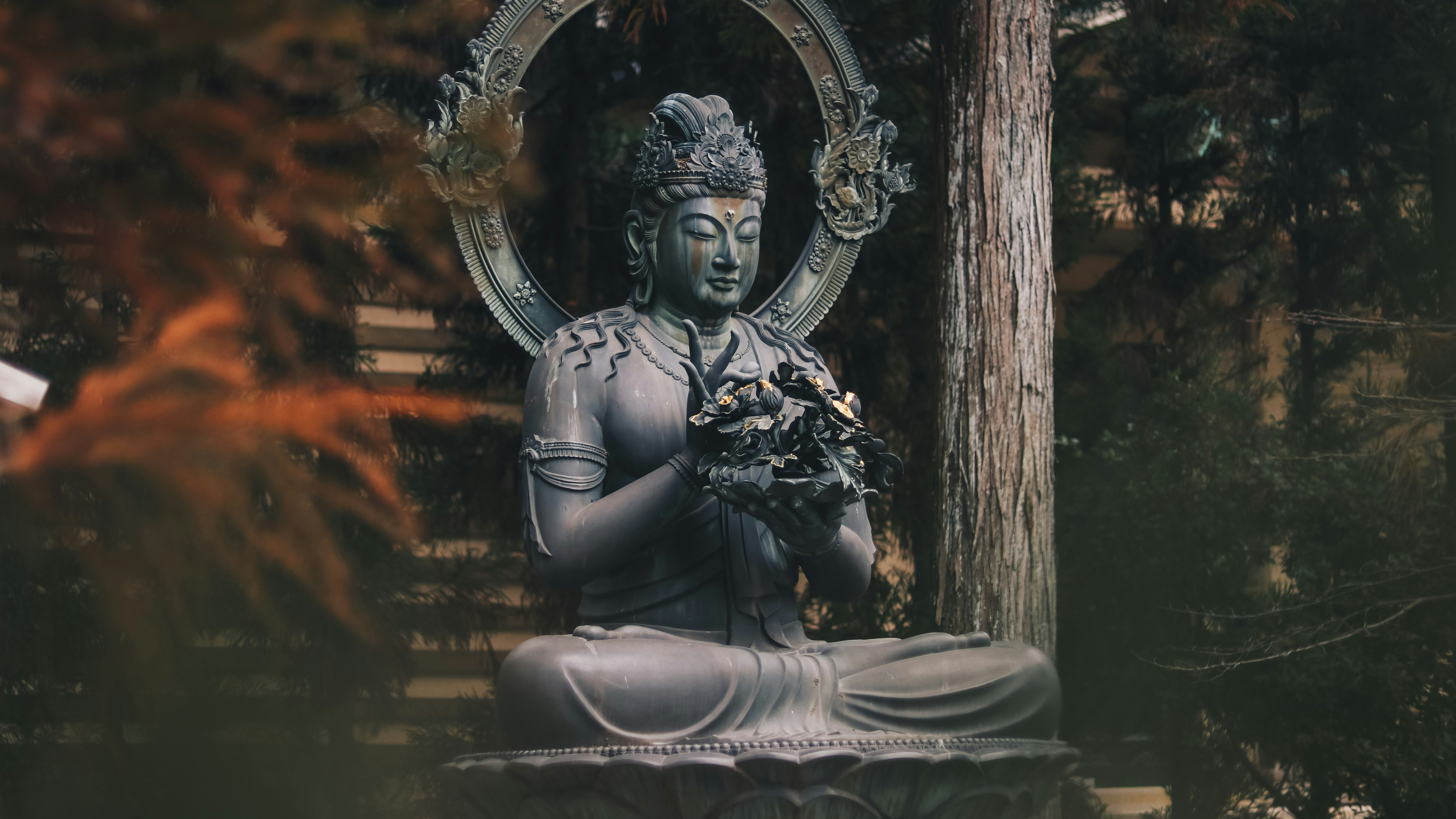
In today’s conversation, we started with the self-transcendent emotion of compassion and explored it from the perspective of Mahāyāna Buddhism’s revered Bodhisattva Vow. In Mahāyāna Buddhism, a bodhisattva is a being who takes a vow to postpone their own entry into nirvāṇa (the state of liberation from the cycle of rebirth) so that they can remain in the world to help all sentient beings achieve salvation. The vow that they take is expressed as follows:
Beings are numberless, I vow to free them.
Delusions are inexhaustible, I vow to end them.
Dharma gates are boundless, I vow to enter them.
The Buddha Way is unsurpassable, I vow to realize it.
At its heart, the Bodhisattva Vow expresses a radical commitment to compassion without limit. Because beings are countless and their suffering is vast, the tasks enumerated in the Vow are essentially (and intentionally) impossible to complete. What inspires bodhisattvas to persevere in the face of this impossibility are the following perspectives:
- Embodied Compassion: The Bodhisattva Vow isn’t about finishing a task or achieving an outcome. It’s about embodying compassion from one moment to the next without end; each act of care is already the vow fulfilled. In Mahāyāna thought, the impossibility of the task is paradoxically what keeps compassion alive: There is always more to give, more beings to serve.
- Joyful Perseverance: One of the six “perfections” (pāramitās) of Mahāyāna Buddhism is energy or perseverance (vīriya). The bodhisattva cultivates joy in the practice itself, not in reaching some proverbial destination. This joy sustains commitment even when the Vow seems endless.
- Faith in Interconnection: The bodhisattva knows that even “small” compassionate acts ripple outward. Supporting the liberation of one being contributes to the liberation of all because all beings are interconnected. This perspective makes the Vow feel both vast and intimate.
In summary, the radical compassion expressed in the Bodhisattva Vow is one that’s appropriate for the ecological crises of our times. Knowing in advance that the work is impossible to complete frees us from our conditioned attachment to results, outcomes and guarantees—and liberates us to serve the precious beings of our world with joyful effort.
SUGGESTED PRACTICE:
Sit quietly and take a few moments to attend to your breath. Then take a few minutes to hold each of the following groups of beings with tender compassion:
- animal beings (i.e., beings that walk, run, swim, fly, hop, crawl, slither, climb, etc.);
- planted beings (i.e., beings that are rooted);
- mineral beings (i.e., mountains, plains, valleys, rivers, lakes, oceans, etc.); and
- human beings.
End the meditation by silently reciting the Bodhisattva Vow with full feeling and reverent awareness.
REFLECTION PROMPTS:
- How can the Bodhisattva Vow support and sustain you in your efforts to meet and transform the ecological crises of our times with compassion?
- What role has compassion played in your engagement with ecological issues?
- What do you find challenging about compassion? What have you found supportive?

Leave a Reply